
Key Takeaways
- Great Smoky Mountains National Park is one of the most biodiverse places on Earth, with nearly 20,000 documented species and the potential for 100,000 more still unidentified.
- The Smokies are home to more than 1,600 flowering plants, with blooms appearing from late February through September, depending on elevation.
- The park supports over 65 mammal species, including roughly 1,900 black bears, reintroduced elk, and white-tailed deer that are commonly spotted throughout the year.
- The Great Smoky Mountains are known as the Salamander Capital of the World, harboring more than 30 species, including the Jordan’s Red-cheeked Salamander, found nowhere else on Earth.
- Wildlife sightings are most likely during the early morning and evening hours.
Pigeon Forge is located at the edge of one of the most biologically rich places on Earth, with Great Smoky Mountains National Park sitting just minutes away. Whether you want to take pictures of wildflowers or look for a unique salamander species, the national park and local forests have a wide range of wildlife to marvel at.
If you’re planning a trip to Pigeon Forge, take a moment to learn more about the wildlife and wildflowers you might encounter on a trip to the Smokies.
Why the Smokies Are One of North America's Most Biodiverse Regions
Nearly 20,000 species have been documented in Great Smoky Mountains National Park, and researchers estimate the true count could reach 100,000 when fungi, invertebrates, and microorganisms are included. UNESCO recognized the park as a World Heritage Site in 1983 and an International Biosphere Reserve in 1976, two designations shared by only the most ecologically significant places on Earth.
Elevation drives much of this richness. The park ranges from roughly 875 feet to over 6,600 feet above sea level, stacking habitats so that northern and southern species coexist within a few miles of each other. The Smokies also served as a refuge during the last Ice Age, sheltering plants and animals that migrated south ahead of advancing glaciers.
Almost 95% of the park is forested, and roughly a quarter of that is old-growth, with trees hundreds of years old standing in groves that have never been cleared. At that scale, it represents one of the largest intact blocks of deciduous old-growth forest remaining in North America. Four distinct types make up its canopy: Spruce-fir, Northern Hardwood, Hemlock, and Pine-and-Oak. The structural diversity of these layered forests is the foundation for everything that lives here.
Wildflowers You Might Spot in the Smokies
With more than 1,600 flowering plants, the Smokies have earned the nickname “the wildflower national park.” Blooms run from late February through September, and timing shifts with elevation. Lower areas flower first, with higher ground catching up as the season warms. Learn more about what wildflowers you can find in the Smoky Mountains by season below:
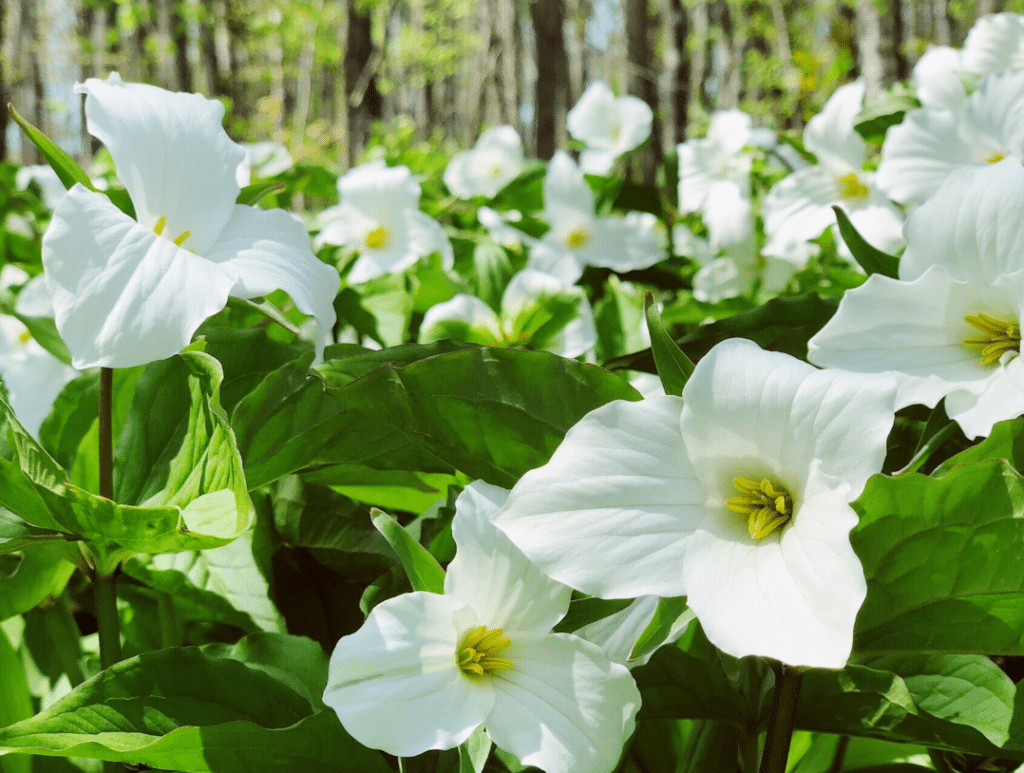
Spring (March–April)
- Bloodroot: White petals surround gold stamens. The flowers open in full sun and close at night, and they’re most common at lower elevations in early spring.
- Spring Beauty: One of the first blooms of the season. Look for its striped white-to-pale-pink petals throughout the park.
- Crested Dwarf Iris: A deep purple bloom with yellow crests. Most common at mid and low elevations.
- Trillium: White and yellow varieties are the most abundant. A classic Smokies wildflower found across a wide range of trails and elevations.
- Purple Phacelia: Clusters of purple-blue blooms line roadsides and trails from April into May.
Late Spring / Early Summer (May–June)
- Flame Azaleas: Brilliant orange and red blooms appear on Gregory Bald and Andrews Bald. One of the most spectacular sights in the park.
- Lady’s Slipper Orchid: Rare and protected, with a distinctive pouch-shaped bloom. Found in both low sandy woods and rocky mountain terrain.
- Mountain Laurel: Clusters of pale pink blooms across mid-elevation slopes.
Summer (July–September)
- Catawba Rhododendron: Dramatic displays appear above 3,500 feet. High-elevation ridges are the best spots to catch them in bloom.
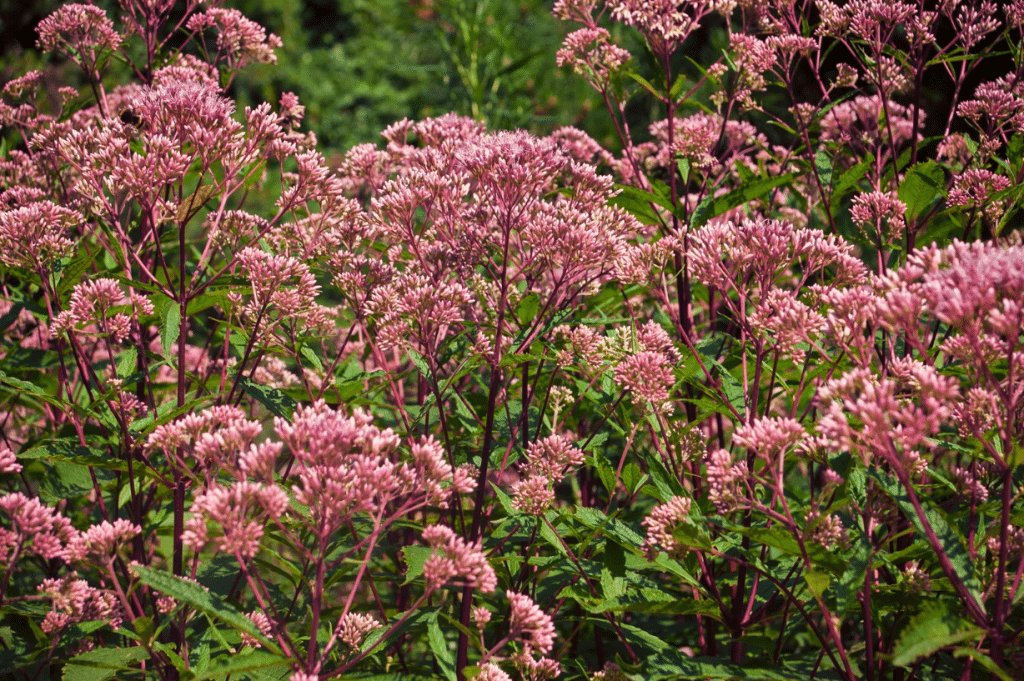
- Joe Pye Weed: Tall purple-pink blooms visible along roadsides near Clingmans Dome.
- Green-headed Coneflower: Bright yellow petals with a distinctive green center. A late-summer standout at higher elevations.
Wildlife You Might See in the Smokies
The park is home to more than 70 mammal species, and the chances of spotting animals in the Smoky Mountains are better here than almost anywhere else in the eastern United States.
Black bears are the most iconic residents. Around 1,900 live within the park, averaging roughly two per square mile. They’re most active at dawn and dusk. Cades Cove and the Roaring Fork Motor Nature Trail are the most reliable spots to look.
White-tailed deer are a common sight year-round. In summer, males grow antlers covered in soft velvet before shedding them in fall. Most fawns arrive in late June, their white-spotted coats blending naturally into the dappled forest light.
Elk were reintroduced in 2001 after more than a century’s absence. Cataloochee Valley is the best spot to find them, particularly during the fall rut when bulls bugle across open meadows.
The park’s smaller residents are just as worth watching for. Red foxes, raccoons, and bobcats are regulars across a range of habitats, and hikers willing to climb to higher elevations may catch a glimpse of the red squirrel or northern flying squirrel.
Birds and Species You Can Spot
More than 240 bird species have been recorded in the park, with 60 living there year-round and 52 making the trip from the Neotropics each spring. The variety of elevations and forest types means the Smokies can support species that would never otherwise share the same landscape.
Pileated woodpeckers, barred owls, and wild turkeys are among the year-round residents. Spring and summer bring the warblers, including the Canada Warbler, a Species of Concern that depends on the park for breeding. The scarlet tanager arrives with the warmer months as well, and its vivid red-and-black coloring is hard to miss against the canopy.
The park offers a few spectacles that go beyond birding. Each late May through June, synchronous fireflies near Elkmont flash in coordinated bursts during their brief mating season. More than 100 butterfly species move through from spring into fall, with the giant swallowtail and monarch among the most recognizable.
The Salamander Capital of the World
Most visitors come for the bears or the wildflowers. Few realize that the park’s most remarkable wildlife distinction belongs to a creature most people walk right past.
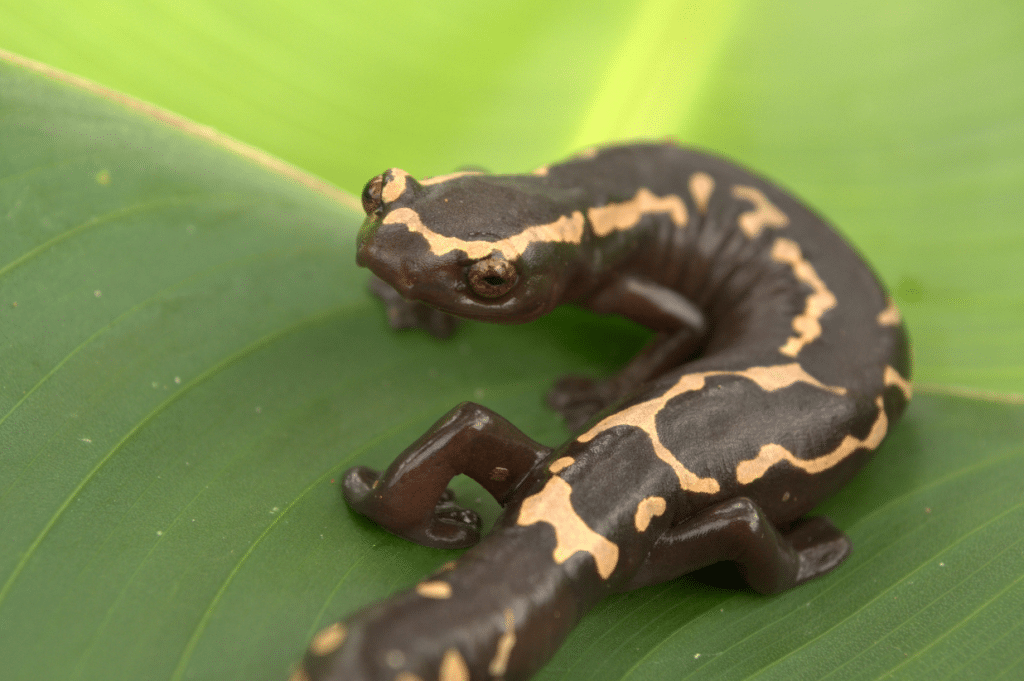
The Great Smoky Mountains are known as the Salamander Capital of the World. With more than 30 species, the park holds higher salamander diversity than any comparable place on Earth. One of those species, the Jordan’s Red-cheeked Salamander, is found only in the park’s high elevations and nowhere else in the world.
The size range alone is striking. The Pygmy Salamander measures barely 1.5 inches, while the Eastern Hellbender can reach 2.5 feet. Most are lungless, breathing entirely through their skin. Cool, consistently damp conditions are essential to their survival, which is why the Smokies are an ideal habitat. The National Park Service has noted that on any given day, the majority of vertebrate animals in the park, including human visitors, are salamanders.
Tips for Spotting Wildlife
Timing and patience go a long way in the Smokies. The following habits will dramatically improve your chances of a genuine encounter, and keep both you and the animals safe while you’re at it:
- Go early or late: Black bears are most active between 6 and 10 in the morning and again from 3 to 7 in the evening. Dawn and dusk work well for elk and deer, too.
- Scan the canopy, not just the ground: Bears, birds, and squirrels spend a lot of time in the branches. A slow look upward often reveals what you’d otherwise miss.
- Carry binoculars: Use binoculars as a safe, respectful way to get a close-up view without closing the distance.
- Keep your distance: Stay at least 50 yards from bears and elk, and 25 yards from all other wildlife. Never feed animals.
Explore the Smokies at WildSide
Located in Pigeon Forge, WildSide puts you right at the edge of all of it. At our adventure park, the mountain biking trails wind through terrain where wildflowers line the path in spring and wildlife sightings are a genuine possibility around any bend. UTV tours take you deeper into the forest, where the canopy closes in, and the scenery shifts with every turn. For a different perspective entirely, the MegaZip sends you soaring above the treetops, with a bird’s-eye view of the same ridgelines that shelter hundreds of species below.
If you’d like to have an adventure while exploring the unique environment of the Smokies, learn more about our adventure park today.