
Key Takeaways
XC mountain biking is built around steady pedaling and climbing to cover distance efficiently across mixed terrain, from smooth singletrack to rocky, rooty sections.
XC bikes prioritize efficient pedaling and a fast, responsive ride feel, often using shorter-travel suspension and lighter builds, with both hardtail and full-suspension options.
XC can be beginner-friendly on the right trails, but distance and elevation often challenge riders first.
XC Mountain Biking Definition
XC mountain biking is a style of mountain biking that focuses on steady pedaling and efficient movement across mixed terrain. Compared to downhill-focused riding, XC usually features more climbing and continuous effort, with descents ranging from mellow and flowy to technical and fast.
Riders also use “XC” in two common ways:
- Everyday XC riding: In a casual context, XC refers to longer rides on local trail systems that mix climbs, descents, and rolling terrain.
- XC racing: XC racing refers to cross-country races that have specific formats, such as XCO, XCX, and XCM. These races can contain punchy climbs, tricky descents, and short technical sections that demand strong bike handling.

What Is an XC Bike?
An XC bike is designed to feel quick and efficient, especially on climbs and rolling terrain. Most XC builds lean light, pedal smoothly, and favor speed over big-hit suspension.
Here’s what that usually means on the trail:
- Faster uphill and on long rides: XC bikes prioritize efficient pedaling, so long climbs and big mileage feel more manageable.
- Quicker handling: Many XC bikes steer and accelerate with a nimble feel that helps you stay on pace.A little less forgiveness on rough descents: Because XC bikes often have shorter suspension travel than trail bikes, riders rely more on line choice and braking control when the terrain gets choppy.
Many XC bikes fall into two main categories:
- Hardtail XC bikes: Front suspension only, often lighter and snappier for climbing and smoother trails.
- Full-suspension XC bikes: Front and rear suspension, often built to stay efficient while adding comfort and control over rougher terrain.
What’s the Difference Between XC and Trail Riding?
Trail riding is the most common style of mountain biking because it’s not tied to a specific race format. It’s the classic “meet at the trailhead and ride” experience, and it usually mixes climbs and descents in the same outing. A good trail ride can include smooth flow sections, rocky corners, rooty traverses, and a few features that help you build skills.
While similar, XC is more focused on riding long distances over varied terrains, with challenging climbs throughout. Unlike trail riding, XC also has multiple race formats for people who want to put their cross-country riding skills to the test.
XC Bikes Vs Trail Bikes
XC bikes and trail bikes can both be hardtails or full-suspension, but they feel different because they’re built for different moments of the ride. An XC bike is tuned to pedal efficiently and keep a fast, responsive feel on long rides, so it typically uses shorter-travel suspension, lighter components, and geometry that feels snappy on climbs and rolling terrain. This forward, race-ready feel makes it easier to hold speed on big loops, but it can feel less forgiving when the trail turns steep, rocky, or choppy.
A trail bike trades some of that razor-sharp efficiency for versatility, descending confidence, and control. Trail setups usually add suspension travel, grippier tires, and sturdier parts. The geometry also tends to be more stable when speeds rise or the trail gets rough. The result is a bike that feels calmer and more comfortable on technical descents and feature-heavy trails, even if it’s not as effective at climbing hills as a dedicated XC build.
What to Expect on XC Trails
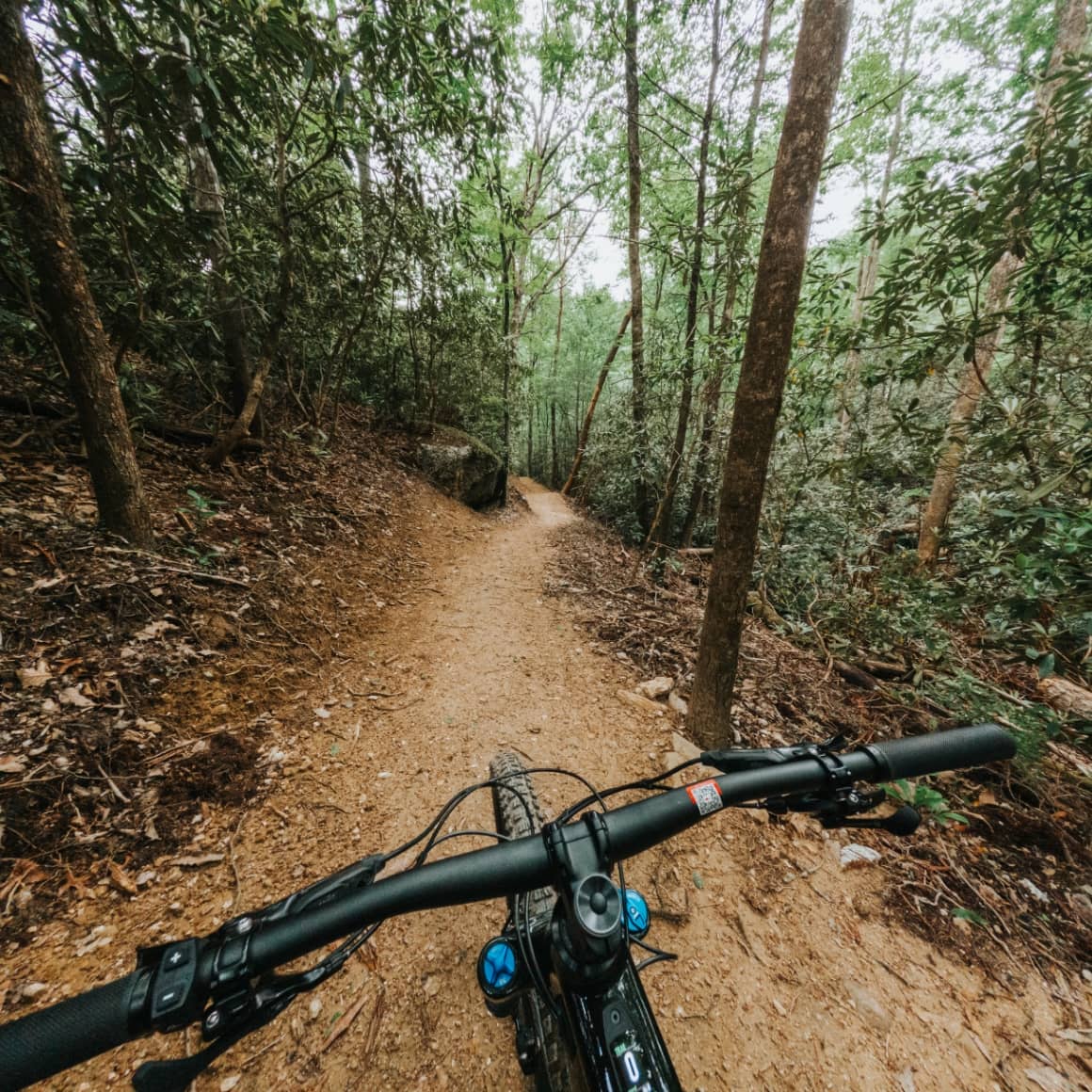
When you ride on XC trails, expect rolling singletrack and steady climbs with lots of pedaling. Some XC routes are smooth, while others add roots, rocks, and quick descents.
XC trails often include a mix of narrow singletrack and wider connectors, such as forest roads or fire roads. The riding style rewards momentum, so you’ll usually feel a steady rhythm of climbing, pedaling through flats, and flowing descents.
Trail surfaces can vary a lot by region and by trail design. One XC loop might feel smooth and fast, and another might include rocky corners, rooty traverses, and short technical sections that keep you on your toes.
If you’re choosing an XC ride for the first time, look for shorter loops, routes labeled beginner-friendly, and trail descriptions that emphasize flow and moderate climbs.

What Do XCO, XCC, and XCM Stand For?
XCO, XCC, and XCM are common cross-country race formats. The acronyms describe how the course is designed, how long the event lasts, and how the racing flows.
Learn more about the main types of XC races below:
XCO (Cross-Country Olympic)
Olympic-style cross-country racing, usually held on an undulating circuit with climbs, descents, and technical sections. Elite races often run around two hours, depending on category and course.
XCC (Cross-Country Short Track or Cross-Country Circuit)
A shorter, faster format designed to be spectator-friendly, often around 20 minutes, with hard efforts from the first seconds.
XCM (Cross-Country Marathon)
Longer-distance racing, typically held on cross-country style terrain over distances that can reach 100 km or more, depending on the event.
Is XC Mountain Biking Good for Beginners?
XC is beginner-friendly on the right trails, especially if you like steady cardio.
XC can be a great entry point because it helps you build the fundamentals fast. You’ll learn pacing, cornering, braking control, and how to ride efficiently, and those skills carry into every other discipline.
For many new riders, the first real challenge is endurance, not technical riding. Climbing and sustained pedaling can feel demanding early on, especially if you pick a route with more elevation than expected.
A beginner-friendly XC day usually comes down to smart choices:
- Keep the route length manageable.
- Pick trails with predictable surfaces and fewer technical features.
- Plan a few short breaks so the ride stays fun from start to finish.
6 Tips for First-Time XC Riders
Your first XC ride doesn’t need to be epic. With the right route, a steady pace, and a few smart habits, you’ll finish feeling stronger and more confident than when you started. Review some quick and easy tips for getting the most out of your first XC ride below:
Start with the right trail choice
A shorter loop with rolling terrain helps you learn the rhythm of XC. After you feel comfortable, add distance or technical sections one step at a time.
Pace the climbs early
A controlled effort on the first climbs keeps your legs fresh later in the ride. When you can breathe steadily and stay smooth, you’re usually pacing well.
Plan for endurance
Water matters on XC rides because the pedaling is constant, and you’ll need to stay hydrated over long distances. A small snack can also help on longer routes, especially when the elevation adds up.
Dial in comfort and control
A proper saddle height makes pedaling feel efficient, and steady braking keeps the bike calm through corners and rough patches.
Carry the basics every ride
A helmet and simple flat-fix essentials help you ride with confidence. When you know you can handle small issues, you’ll be more likely to go for an extra loop or ride a few extra miles down an XC trail.
XC Mountain Biking FAQs
Are XC Trails Always Easy?
XC trails aren’t always easy, because “XC” describes a style, not a difficulty rating. Some routes stay smooth, and others include technical features and fast descents.
Some XC routes are designed to be endurance-friendly on smoother terrain, so they feel approachable and flowy. Other XC routes borrow from modern race-style design and include rocky sections, technical corners, and descents that demand real skill.
If you’re planning an XC ride, the best move is to check the trail description and difficulty rating, then choose a loop that matches your current comfort level.
How Hard Is XC Mountain Biking?
XC can feel moderate or very challenging depending on distance, elevation, and technical features. Difficulty rises quickly when climbs stack up and descents get rough.
XC difficulty usually comes down to three factors:
- Distance: Longer rides demand more endurance and better pacing.
- Elevation gain: More climbing raises the effort, even on smoother trails.
- Technical features: Rocks, roots, tight turns, and fast descents increase the skill demand.
A short XC loop with rolling terrain can feel approachable and rewarding, especially for newer riders. A longer route with sustained climbs and technical descents can feel like a full-body challenge, even for experienced riders.
What Gear Do You Need for XC Mountain Biking?
For XC mountain biking, you’ll need to wear a properly fitted helmet for safety, gloves to improve your grip, and eye protection for dust and debris. Many mountain bikers also like to bring spare tubes, patch kits, tire levers, bike pumps, and multitools in case they get a flat or need to make a repair. Additionally, bring something to drink, a snack, and a small first aid kit for any scrapes.
How Is XC Different From Downhill or Enduro?
XC is pedal-driven and endurance-focused. In contrast, Enduro blends big descents with untimed climbs between stages, and Downhill is gravity-first, steep, fast, and built around descending.
Mountain Bike Through the Smoky Mountains at WildSide
If you’re ready to explore the Smoky Mountains on a mountain bike, come to WildSide. At our adventure park, you’ll find over 20 mountain biking trails, a jump park, and an 11+ mile trail system. With the difficulty of trails ranging from beginner all the way to professional, we’re confident you can find a trail that matches your riding style and skill level. We also have manual and electric mountain bikes for rent, as well as MTB classes.
Learn more about our mountain biking trails and rentals today! If you’re ready to explore our trails, please book your bike pass today!