
Key Takeaways
Trail riding is a varied, non-competitive style of MTB on marked trails that often include ratings and built features.
Most trail systems mix effort and flow, with punchy climbs, rolling singletrack, and descents that range from mellow to technical.
Trail ratings help you choose terrain that fits your current skill level, which keeps progression fun and controlled.
Good etiquette is part of trail mountain biking, especially on multi-use trails where yielding and muddy-trail awareness matter.
Trail riding is the “everyday” side of mountain biking. You climb, you descend, you hit a few features, and you finish feeling like you actually rode a trail, not just a workout loop or a bike park lap. If this style of mountain biking sounds like something you’d enjoy, review our beginner’s guide to MTB trail riding today.
What Is Trail Riding?
Trail riding is all-purpose mountain biking on marked trails that blend climbing, descending, and various trail features, giving riders plenty of variety.
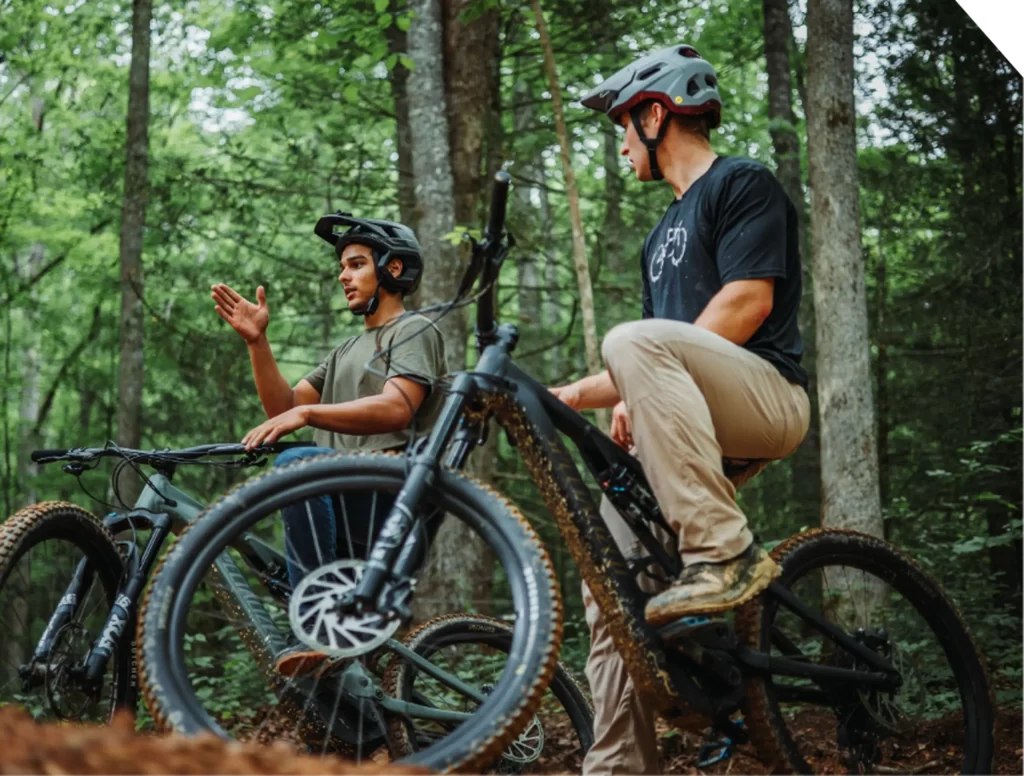
Trail riding sits in the broad middle of mountain biking. You might be on a waymarked trail system with graded routes, or you might be on natural singletrack and forest paths. Either way, the goal stays the same: ride a mix of terrain and have a good time doing it. As trails get harder, you’ll see more technical trail features like berms, rock gardens, drops, and jumps.
What to Expect with Trail Riding
If you’re new to trail riding, you can expect the following on your ride:
1. Different Trail Types
During a trail ride, you might encounter one or more of the following trails:
- Flow Trails: You’ll get smoother tread, built rollers, and shaped turns that reward a rider’s ability to carry momentum.
- Technical Trails: Trails often include more roots, rocks, awkward climbs, tighter lines, and slower-speed balance moments that test bike control as well as fitness.
- Climb Trails and Descent Trails: Some systems separate directions for safety and better flow, which changes how you pace and how you pass other riders.
- Singletrack, Doubletrack, and Connectors: Singletrack is roughly handlebar-width, while doubletrack and fire roads give you wider lanes that often connect trail segments.
2. Varied Trail Features
Alongside different trails, you’ll likely experience at least a couple of the following trail features on your route:
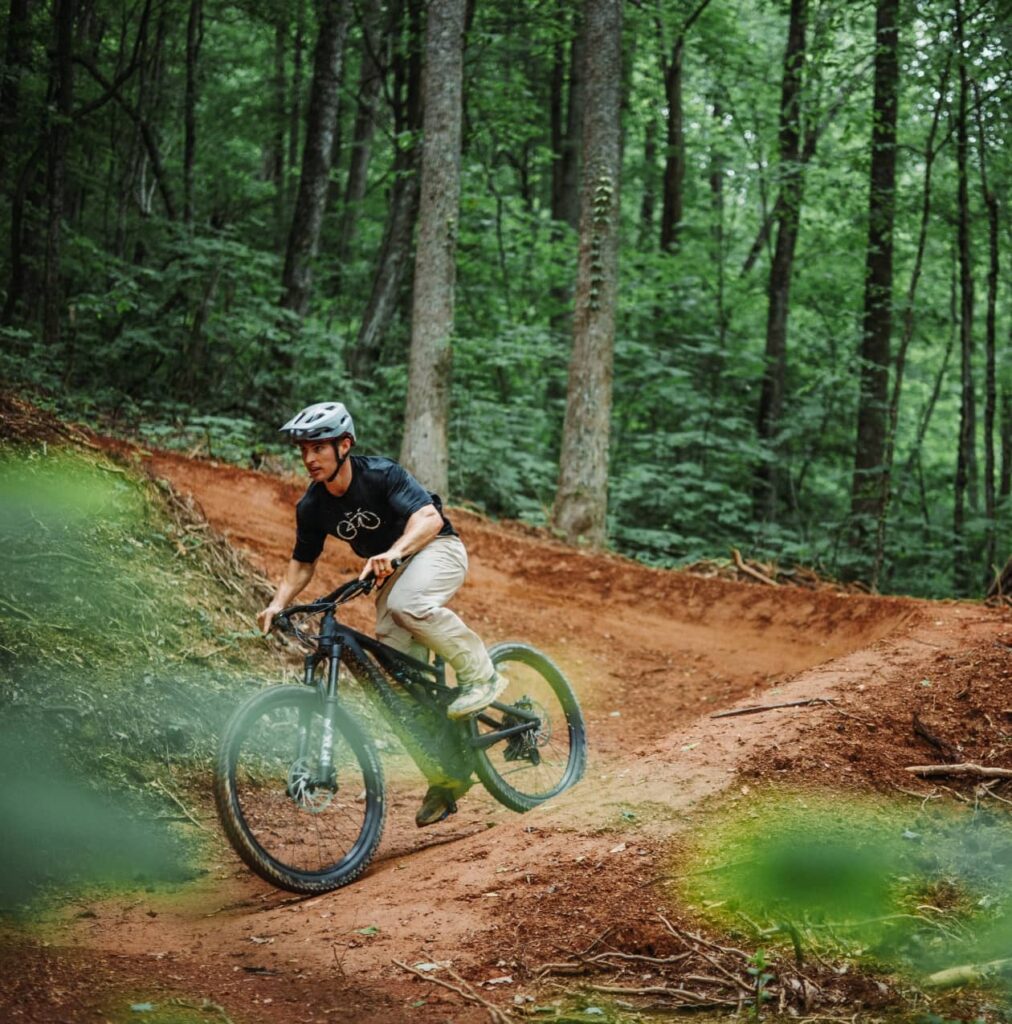
- Corners and Flow Builders: Berms, banked turns, switchbacks, and off-camber corners.
- Natural Tech: Roots, rock gardens, loose-over-hard patches, ruts, and uneven ledges.
- Small Airtime and Trail Shapes: Rollers, tabletops, small drops, and optional jump lines.
- Man-Made Trail Elements: Bridges, skinnies, boardwalks, and rock armoring.
Since these features can make a trail a bit more difficult, make sure that you look ahead, pick a line early, and set your speed before the feature so the bike stays stable through it.
3. Steady Riding With Occasional Bursts of Energy
Trail riding effort tends to feel like steady work with short bursts. You’ll pedal consistently, but expect the trail to require you to occasionally put in extra effort. For example, you’ll need to work harder on a punchy climb, a rocky section where you can’t coast, or a restart after a slow technical turn. Trail mountain biking asks for cardio and bike handling, and those two skills trade off depending on the trail.
Trail Ratings and What They Mean for Trail Riders
Before you go trail riding, you need to understand what trail ratings mean so you don’t end up on a trail that you’re not ready for.
Most trail rating systems use a color and shape approach, with IMBA being the most common trail rating in North America. In this system, trails are color-coded, with white being the easiest, green easy, blue intermediate, black advanced, and double black expert only.
What Changes a MTB Trail’s Rating?
A higher difficulty MTB trail will typically include the following:
- Steeper grades and longer sustained climbs
- Narrower tread and tighter turns
- Larger obstacles and more frequent technical features
- Higher consequences if you miss a line
Trail Etiquette That Keeps Everyone Happy
Knowing the right trail etiquette can ensure everyone has a great time out on the trail. Review the trail etiquette you should know before your first trail ride below:
- Yield to Other Trail Users on Multi-Use Trails: Mountain bikes typically yield to hikers and horses unless the trail is clearly signed for bike-only travel.
- Respect Uphill Riders: A common guideline is that downhill riders yield to uphill riders unless the trail is signed as one-way or downhill-only.
- Make Passes Predictable: Announce yourself early, wait for a safe spot, and pass with enough space that nobody feels rushed or crowded.
- Stay Off Trails When They’re Too Wet: Muddy trails rut easily, and damage is harder to undo than most riders realize.
- Ride With Stewardship in Mind: Cutting switchbacks, widening trails around puddles, and skidding through corners all shorten the life of the trail.
How to Get Better at MTB Trail Riding
If you want to get better at trail riding, follow these tips:
1. Master One Trail Rating Before Moving to the Next Highest
Repeat the same trail until it feels smooth, not just survivable. When the ride feels controlled, bump up one rating and keep the same mindset.
2. Get Used to Easier Trail Features and Gradually Add More Difficult Ones
Pick one feature category at a time:
- Start with berms and smoother rollers.
- Add roots and rock gardens once you’re comfortable scanning ahead.
- Save drops and jump lines for later, and treat optional lines as optional.
3. Practice a Few Core Skills
Trail ride mountain biking gets easier when you focus on improving these skills:
- Braking earlier and more smoothly
- Cornering with eyes up and shoulders relaxed
- Standing balanced through rough sections
- Choosing a line before you get to the obstacle
Beginner classes and trail rides with instructors can help you catch mistakes early and practice all of these skills in a supportive environment.
4. Start With Easier, Longer Rides Rather Than Difficult Short Ones
When you first start mountain biking, you’ll likely get tired more quickly as your body gets used to this type of exercise. Tiredness makes you less alert, so build ride time gradually.
5. Avoid Common Trail Riding Mistakes
A trail ride gets a lot smoother when you avoid these habits:
- Gripping the bars too hard, which makes the front wheel feel twitchy.
- Staring at the obstacle instead of the line around it.
- Braking in the middle of a corner instead of setting your speed before the turn.
Trail Bike vs XC Mountain Bikes
An XC mountain bike is built to go fast for a long time, especially on climbs and rolling terrain. It’s usually lighter and more efficient, with shorter-travel suspension (often around 100–120 mm), quicker steering, and faster-rolling tires that reward steady pedaling and smooth line choice.
A trail bike trades some of that snap for confidence and comfort, with a bit more travel (often around 120–150 mm) and a more stable feel on rough sections. It also has grippier tires and sturdier parts to help it stay composed on roots, rocks, and steeper descents.
Trail vs Enduro Mountain Bikes
A trail bike is an all-around setup for typical rides where climbing and descending matter about equally. In contrast, an enduro bike is built to descend fast on technical terrain, but it’s still climbable enough to pedal the untimed transfer climbs that connect major downhill sections.
Compared to a trail bike, enduro bikes usually add more suspension travel (often around 150–180 mm), a slacker, more downhill-leaning geometry, and heavier-duty tires and brakes. These features boost stability at speed but can feel slower and more work on flatter trails and long, steady climbs.
Trail vs Downhill Mountain Bikes
Unlike how trail bikes are built for all-around performance, a downhill bike is purpose-built for steep, technical descents where control at speed matters most, and it’s not designed to feel efficient on flatter terrain or sustained climbs.
Compared to a trail bike, downhill bikes typically have around 200 mm of front suspension travel, with rear travel often falling in the 180–200 mm range. They also often use dual-crown forks for extra rigidity and stability on big impacts. Additionally, you can expect downhill bikes to have heavier-duty frames and components, more powerful brakes, and aggressive tires, because downhill riding prioritizes stability and durability over pedaling efficiency.
Quick Gear and Setup Notes for Trail Riding
Keep it simple, especially as a beginner:
- Wear a helmet every ride, and add eye protection if the trails are wooded or dusty.
- Bring water and a small snack, because short rides can turn longer fast.
- Carry a flat fix, like a tube or plug kit, plus a small pump or CO2.
- Choose mountain biking-specific shoes with a stiffer sole.
FAQs
Is Trail Riding Good for a Beginner Mountain Biker?
Yes. Trail riding is one of the most beginner-friendly ways to get into mountain biking because you can choose easier trail ratings and progress gradually as skills improve.
What Trail Features Should Beginners Avoid at First?
Start with features you can roll smoothly, like mellow berms and small rollers. Skip drops and jump lines until you feel consistent braking control and steady body position on easier terrain.
What Are Beginner Trail Riders Usually Surprised By?
Most beginners are surprised by three things:
- Small climbs stack up quickly, even on easy trails.
- Descents feel faster on dirt because the trail narrows your sight line.
- Features show up without warning until you learn what to look for, like shaped berms, rock piles, or a sudden dip.
How Do I Pick a Trail for My First Trail Ride?
Choose a beginner-rated route, keep the ride short, and prioritize a trail you can repeat. Repetition builds confidence faster than hunting for the perfect trail every weekend.
Try MTB Trail Riding at WildSide
If you’d like to try MTB trail riding in Pigeon Forge, TN, come to WildSide. Our adventure park was first and foremost built for bikers, with 20 total trails covering over 11 miles and a variety of difficulty levels. Alongside our trails, we offer standard and electric mountain bikes, a jump park, and guided classes. When you’re new to MTB, our fundamentals class is a great option, and after you nail the basics, our guided ride + skills session can be a great way to improve your trail riding skills.
Learn more about our mountain biking trails and rentals today. When you’re ready to visit our park, review our bike passes.