
Key Takeaways
- All braking must happen before you reach the berm, because mid-turn braking forces the bike upright and directly fights the lean the banking is built to support.
- A wide entry from the outer edge of the trail lets you use more of the berm’s banking and sets up a faster, more controlled exit.
- Leaning the bike beneath you while keeping your torso relatively upright gives your tires maximum contact with the trail surface and is the core skill that separates confident berm riders from riders who scrub speed on every corner.
- Fixing your gaze on the exit from the moment you enter a berm is one of the fastest ways to improve both your line and your speed.
- On moderate berms, weight the outside pedal down for extra grip, but on steep or fast berms, level cranks give you a more neutral base and make it easier to pump the banking for additional speed.
Berms are one of the most satisfying features on any mountain biking trail, and one of the most common places riders leave speed on the table. Nail the entry, the lean, and the exit, and a berm becomes a place where you actually gain momentum rather than lose it.
If you want to know how to ride berms as a beginner to mountain biking, take a moment to review our top seven tips for riding berms and the six most common mistakes to avoid.
What Is a Berm in Mountain Biking?
A berm is a banked corner built into a trail. The banking angles inward toward the turn, giving your tires support that a flat corner simply doesn’t have. A well-built berm lets you carry more speed than flat dirt allows, because the banking keeps your tires planted without requiring you to fight gravity.
Berms range from gentle curves assisting a moderate turn to steep walls capable of carrying riders through a full 180-degree hairpin. You’ll find them on flow trails, at bike parks, and increasingly on natural singletrack as trail builders design features that reward momentum over caution.
How to Ride Berms for Beginners: 7 Tips for Riding MTB
Learning how to ride berms for beginners comes down to practicing a few fundamentals. Nail the following tips, and you’ll stop scrubbing speed on every corner:
1. Brake Before the Turn, Not Inside It
All braking happens on the approach. Mid-berm braking forces the bike to stand upright, which fights the lean that the banking is designed to support. The physics work against you once you’re inside the turn, so treat the run-in as your only window to manage speed. If you find yourself reaching for the brakes mid-corner, the fix is usually entering with less speed next time, not more braking on the way through.
2. Enter Wide, From the Outside Edge of the Trail
Start your approach from the outermost edge of the trail and let the arc carry you through. A wide entry smooths the corner and sets up a faster, more controlled exit. Think of it like drawing a large arc rather than cutting a sharp angle. The wider your entry, the more of the berm’s banking you can use, and the less work your tires have to do.
3. Aim Above the Midpoint of the Berm, Not the Bottom
The low point of a berm collects loose dirt and gravel swept off the main riding surface, and it’s where the banking gives the least support. Aim slightly above center.
The top edge is the weakest part of the berm and the easiest place to overshoot, so thread the middle ground. Over time, you’ll develop a feel for reading each berm’s sweet spot before you reach it.
4. Set Your Body Position Before You Reach the Turn
Drop your seat post if you have a dropper. Hover just above the saddle with elbows and knees bent, keeping your whole body relaxed. Your chest should stay low over the bars, weight centered between the wheels rather than pitched toward the rear. Stiff arms and a high torso transfer every bump directly to your steering and reduce your ability to make small corrections through the turn.
Pedal position in a berm depends on the feature. On moderate berms, weight the outside pedal down to load the cornering edge of your tires. On steeper, faster berms, keep your cranks level to give yourself a more neutral base and make it easier to pump the banking for speed.
5. Lean the Bike, Not Just Your Body
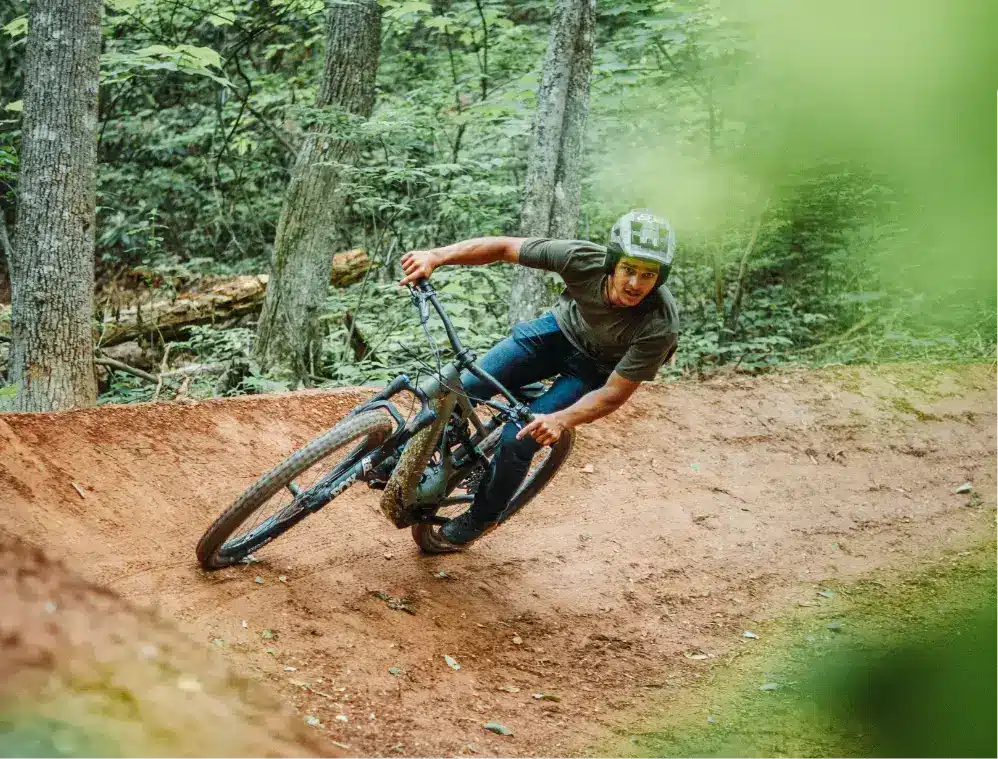
This lean-the-bike principle is where proper berm technique gets counterintuitive for newer mountain bikers. Push the bike into the turn beneath you while keeping your torso relatively upright. The banking does that work for you, so trust it.
Bike-body separation is what gives your tires maximum contact with the trail surface. Riders who tilt their whole body tend to reduce that contact rather than increase it.
6. Fix Your Eyes on the Exit and Keep Them There
Look where you want to go, not at the ground in front of your wheel. As you enter, set your gaze on the exit and let your vision move down the trail ahead. Your body follows your eyes, especially in a berm.
If you find yourself staring at the inside edge of the turn or at the dirt immediately ahead of your front wheel, you’ll likely end up exactly there.
7. Reset Between Back-to-Back Berms
Linked berms are common on flow trails and a staple of bike park berms. Your exit from one is your setup for the next. Leave each berm centered, let the bike settle, and commit to your next entry line.
Chasing the fastest possible line through one berm at the cost of your positioning for the next will cost more time overall than a clean, controlled exit that carries momentum into the sequence.
6 Common Mistakes to Avoid When Riding Berms
Even experienced riders can fall into habits that bleed speed and control. Whether you’re new to berms or returning after time off the bike, you’ll want to watch out for the six primary mistakes riders make on berms:
- Braking inside the turn: It kills momentum and fights the lean. Do all braking before the banking starts.
- Entering at the bottom of the berm: Loose material collects there, and the banking offers the least traction support at the low point.
- Looking at the ground immediately ahead: Your body goes where your eyes point. Keep them on the exit throughout the turn.
- Staying stiff: Locked elbows and rigid knees transfer every surface irregularity straight to your handling. Stay loose.
- Not leaning the bike: Riders who stay upright leave the main advantage of a berm unused. The feature was built to be leaned into.
- Going too slow: A berm needs momentum to work as intended. Too little speed and you’ll feel unsupported rather than planted.
How to Ride a Berm FAQs
Should You Enter a Berm High or Low?
Aim above the midpoint. The bottom collects loose material and gives the least support. The top edge is weak and easy to overshoot,
Entering high sets up an earlier turn and lets the downward slope build exit speed naturally. When in doubt, aim above center and adjust from there.
How Do I Lean in a Berm Without Falling Over?
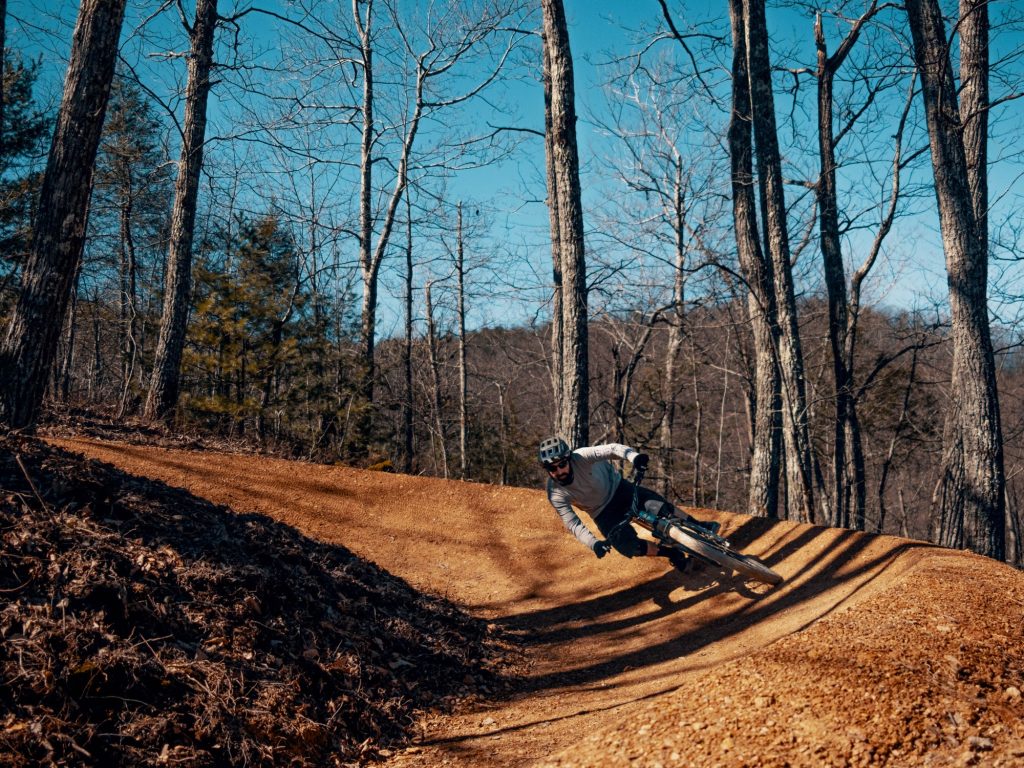
The berm’s banking is designed to support the lean. Focus on pushing the bike into the turn rather than tilting your whole body with it.
A properly built berm counteracts the forces trying to tip you over. Start at moderate speed, commit to a controlled lean, and build confidence with each pass.
How Do I Carry More Speed Through a Berm?
Complete your braking early, enter with momentum, and keep your fingers off the brakes from entry to exit.
Knowing how to hit a berm with speed is mostly about what you don’t do inside the turn. A wide entry, a clean lean, and a firm push through the exit keep momentum on. You can also pump the banking by compressing into the arc and extending through the exit.
What's the Difference Between Railing and Carving a Berm?
Railing means leaning fully with the bike, cranks level, committing to the banking. When carving, you lean the bike more than your body, which gives better grip and control in tighter turns or loose conditions.
To rail berms effectively, you need a steep, well-supported berm and enough speed to hold the lean. Carving gives you more control when those conditions aren’t there.
How Do I Practice Riding Berms?
Pump tracks and flow trails are the best places to build berm feel before taking the technique to harder terrain.
For bike park berms tips, start on gentler features before progressing to steep walls or linked sequences. Having someone film you from outside a berm quickly reveals what your body is actually doing.
What's the Best Pedal Position in a Berm?
It depends on the berm. Outside pedal down for moderate berms at moderate speed. Level cranks for steep, fast berms.
Outside pedal down loads your tires’ cornering edge for extra grip. Level cranks are more neutral and easier to pump. Learning how to ride steep berms well means getting comfortable with both positions.
Practice Riding Berms at WildSide
Whether you’re figuring out how to ride berms MTB for the first time or refining your berm technique mountain biking on more demanding features, WildSide has terrain for every skill level. When you visit, you can practice riding berms on one of our beginner trails before you’re ready to give a more difficult trail a shot. We also have classes and mountain biking rentals for those new to MTB!
Learn more about mountain biking at our adventure park today! If you’re interested in renting a bike or securing a day pass, review our bike passes and rental options.