
Key Takeaways
The most important part of cornering happens before the turn, meaning your entry speed, braking, and body position all need to be sorted while you're still traveling in a straight line.
Your tires can brake or turn at full strength, but not both at once, so all meaningful braking happens before the corner begins.
Wherever your eyes go, the bike follows, so lock onto the exit before you're fully in the turn.
Dropping the outside foot drives your tire's knobs into the ground for grip and keeps the inside pedal from catching trail obstacles.
Slow, deliberate repetition on a single corner builds better habits than riding full laps at speed.
If you’re new to mountain biking or have been out of practice, you know how difficult cornering can be. You come into a corner with decent speed, something goes sideways, and suddenly you’re grabbing the brakes, drifting wide, or having an unplanned conversation with the dirt. Cornering is where most beginner mountain bikers lose their confidence, and it’s also where they lose the most time. Almost every slide-out, every wide exit, every death grip on the brakes traces back to technique, and, fortunately, technique is fixable.
This guide covers the five fundamentals of mountain bike cornering, from setup to execution, alongside the corner types you’ll encounter on the trail, the mistakes that are probably holding you back, and a drill to actually build your muscle memory.
What Is Cornering on a Mountain Bike?
Cornering on a mountain bike is the technique of navigating turns on the trail while maintaining control, traction, and speed.
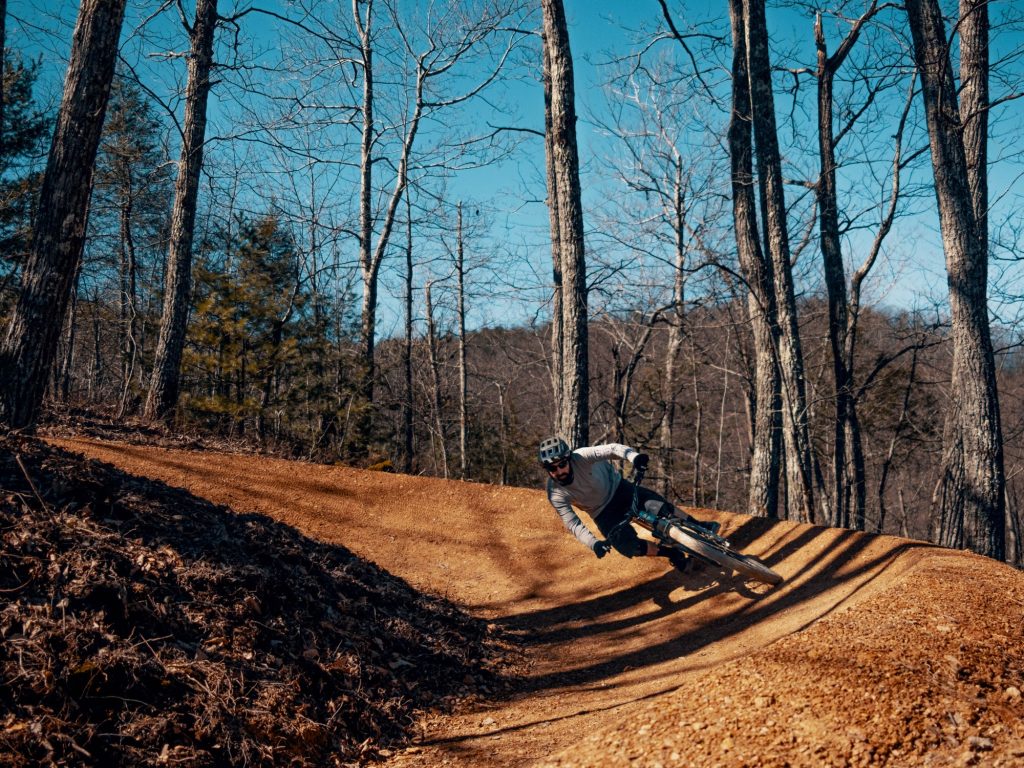
It involves coordinating your body position, eye line, braking, and foot placement to carry momentum through a turn rather than fighting against it. Good cornering technique applies to every corner type you’ll encounter — berms, flat turns, switchbacks, and off-camber sections — and is widely considered the most impactful skill a rider can develop.
How to Corner on a Mountain Bike
Most riders treat cornering as a single motion. Lean, steer, hope for the best. However, developing the right mountain bike turning technique actually comes down to five habits working together, each one setting up the next. Check out the following top five MTB cornering tips for beginners to ensure you have the fundamentals down:
1. Set Up the Corner Before You're In It
Almost nobody tells new riders that the most important part of cornering happens before the turn. What you do in the 10 to 15 feet before you enter a corner determines whether you exit clean or scramble. As a result, speed, gear, and body position all need to be sorted while you’re still traveling in a straight line.
Braking belongs on the approach, before the corner begins. When you’re first learning to corner, enter feeling like you’re going slightly too slow, as the natural tendency is to carry more speed than the turn actually needs. Arrive at the turn with your hands off the brakes and your weight settled. If you’re consistently sliding out or going wide, the problem almost certainly started on the approach.
2. Get Into the Attack Position on Your Mountain Bike
With your speed set, your MTB body position for cornering needs to be dialed in before the turn begins. Namely, you should be in the attack position, which is an athletic stance that puts you in control of the bike rather than along for the ride. Hinge forward at the hips until your chest is low and your back is roughly flat, and drop your weight through your feet. Your grip on the bars should be relaxed. Pressure in your palms means you’re sitting too far forward.
In the past, you might have heard to flare your elbow wide. However, most skills coaches have since walked that advice back since this position actually limits your range of motion while cornering. Instead, keep your elbows relaxed, slightly bent, and pointed behind you rather than out to the sides.
3. Look to the Exit, Not the Apex
Where your eyes go, the bike goes. Body weight and subtle handlebar pressure respond to your gaze before conscious steering input even registers. Most riders instinctively fix on the apex or stare down at the front wheel. Both choices send the bike toward exactly what they’re staring at.
Scan the entry line on approach, shift your gaze briefly to the apex as you commit, then lock onto the exit before you’re fully in the turn. Doing so will cause your body to adjust automatically. The exit is where you want to be, so give your eyes a head start getting there.
4. Drop the Outside Foot
As you enter the corner, press down through the outside pedal and drop your heel. This pressure loads the contact patch of your tire against the ground, drives the knobs in for grip, and creates a stable axis for the bike to lean around. The move also naturally lifts the inside pedal higher, keeping it from clipping roots or rocks mid-corner.
Outside foot down MTB is the right default for most corners. On a well-built berm, the banking provides stability on its own, so you can keep your feet level and pump through the turn. For flat corners and anything sketchy, outside foot down is your anchor.
5. Lean the Bike, Not Your Body
Lean the bike, not your body. Keep your torso upright and relatively centered while the bike angles underneath you. Letting your torso collapse inward while riding the bike reduces tire contact with the ground, costing you traction and stability.
Think of the bike and body as two separate things moving at once: the bike tilts into the turn while you stay stable and balanced above it. As your riding progresses, pushing the outside of your body slightly away from the bike drives more weight through the tires for added grip. For beginners, staying upright and centered is the move.
4 Types of Corners You'll Hit on the Trail
The five fundamentals apply everywhere, but each corner type has its own demands. Recognizing what you’re about to ride changes how you set up for it. The most common types of corners on MTB trails include:
Bermed Turns
A bermed corner has a banked wall on the outside edge, like a scaled-down version of a skateboard ramp. The banking holds your line and lets you carry more speed than a flat corner would allow. Lean into the berm, keep your speed consistent through the apex, and let the shape of the trail push you through. On a good berm, the turn practically handles itself.
Flat Corners
No banking, often loose or hardpack dirt, and none of the trail's geometry working in your favor. Flat corners put the full weight of execution on you. Outside foot down is critical here. Take the most compacted line through the turn, keep your entry speed conservative, and commit to it. Tentative riders wash out on flat corners more than any other type.
Switchbacks
A tight, steep directional reversal found on descents where the trail doubles back on itself. Slow way down before entry. Keeping your body more upright than usual puts more of the tire in contact with the ground, which means more grip. Steer actively with the handlebars rather than relying on lean angle. Switchbacks reward patience over aggression.
Off-Camber Corners
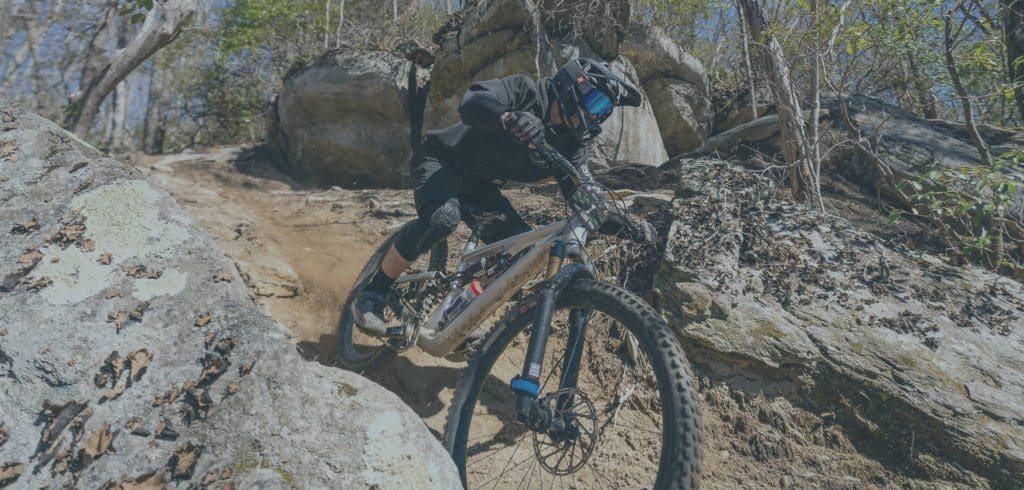
The trail surface tilts away from the direction of the turn, so gravity is actively working against your tires. These are the trickiest corners on any trail. Slow your entry further than feels necessary, weight the outside foot hard, and pick a line that crosses any roots or rocks at a straight angle rather than a diagonal. There's no banking to save you here.
4 Common Cornering Mistakes to Avoid
Most cornering problems come from a short list of habits, and once you can name them, they’re fixable. Learn more about the top four beginner’s cornering mistakes:
Braking Mid-Corner
Your tires have a limited amount of grip available. Braking uses some of it, which leaves less for turning. A tire asked to do both at once can't do either well. Getting your speed set on the approach — before the turn begins — is the single habit that addresses both traction loss and sliding out.
Staring at the Front Wheel
Looking down tightens your steering and collapses your line. Your bike follows your eyes, so if you're watching the wheel track through the dirt, that's the exact line you'll ride. Eyes up, eyes forward, eyes on the exit.
Inside Foot Down
Natural instinct, wrong move. When the bike leans into a corner, the inside pedal swings closest to the ground, and your foot will catch a root, rock, or rut if you leave it there. Outside foot down, every time.
Entering Too Hot
A fast exit comes from a controlled entry. Come in over your head, and you'll grab the brakes mid-corner, lose traction, and finish the turn slower than if you'd set your speed earlier. The goal is a high-speed exit, which means arriving at the turn a little slower than feels necessary. You'll leave faster than you expect.
How to Practice Mountain Bike Cornering
Reading about technique and building muscle memory for it are two different activities. The fastest way to actually improve is through deliberate, repetitive practice on a single corner rather than a full lap, where attention gets split ten ways.
Find a mellow, low-consequence corner on an easy trail and ride it six to eight times at slow speed, isolating one variable per set. First, focus only on your eye line: are you locking onto the exit, or drifting toward the front wheel? Next, outside foot position only. Entry speed after that. One variable per round.
Remember that you shouldn’t be going full speed at first. Riding the corner slowly and doing it right will get you going faster than riding it hard and locking in bad habits.
Most riders corner meaningfully better in one direction than the other, which is completely normal. The uncomfortable side is where the biggest gains hide. Spend extra reps there.
For faster progress, you might also want to sign up for a beginner’s mountain biking class. The expert-level instruction will ensure your technique is correct and help you gain confidence fast.
FAQs
Where Should I Look When Cornering on a Mountain Bike?
Your eyes should be locked on the exit before you’re fully in the turn. Body weight and handlebar pressure follow your gaze automatically, so pointing your eyes at the exit is the most direct way to clean up your line.
Should I Lean the Bike or My Body When Cornering?
The bike leans into the corner. Your body stays upright above it, centered over the contact patches. Letting your torso collapse inward reduces the tire contact available for grip. Upright is faster.
What Foot Should Be Down When Cornering on a Mountain Bike?
The outside foot goes down, heel dropped, pressing through the pedal.
This position loads the tire’s contact patch, drives the knobs into the ground for grip, and lifts the inside pedal away from trail obstacles. On a well-banked berm, keeping feet level and pumping through the turn is fine. Outside foot down is the right default everywhere else.
Why Do I Lose Traction in Corners?
Two causes of lost traction show up most often: braking mid-corner pulls grip away from turning, and entering too fast forces a mid-turn correction that has the same effect. Both are approach problems.
Set your speed before the corner, release the brakes as you turn, and weight the outside foot.
How Do I Stop Sliding Out in Corners?
Check three things: entry speed, outside foot position, and whether you’re touching the brakes in the turn. Most slides trace back to one of those. On loose terrain, slow your entry and commit harder to the outside foot.
How Do I Brake on a Mountain Bike Corner?
All meaningful braking happens before the corner, while your wheels are pointed straight and your bike is upright. If you need to scrub speed mid-turn, ease off very gradually. Sudden braking in a corner is the fastest way to lose the front end.
Practice Cornering on a Mountain Bike at WildSide
WildSide’s trail network is built for progression. Beginners can dial in the fundamentals on machine-groomed green trails with enough variety to take flat corners, gentle berms, and varied entry speeds without anything high-consequence waiting around the bend. When you’re ready to step up, our intermediate and advanced terrain adds switchbacks, tighter flat corners, and off-camber sections to the mix. For riders who want structured coaching alongside trail time, they can call to join one of our mountain biking classes.
Learn more about mountain biking at WildSide today. If you’re ready to ride our trails, please review our ticket options!